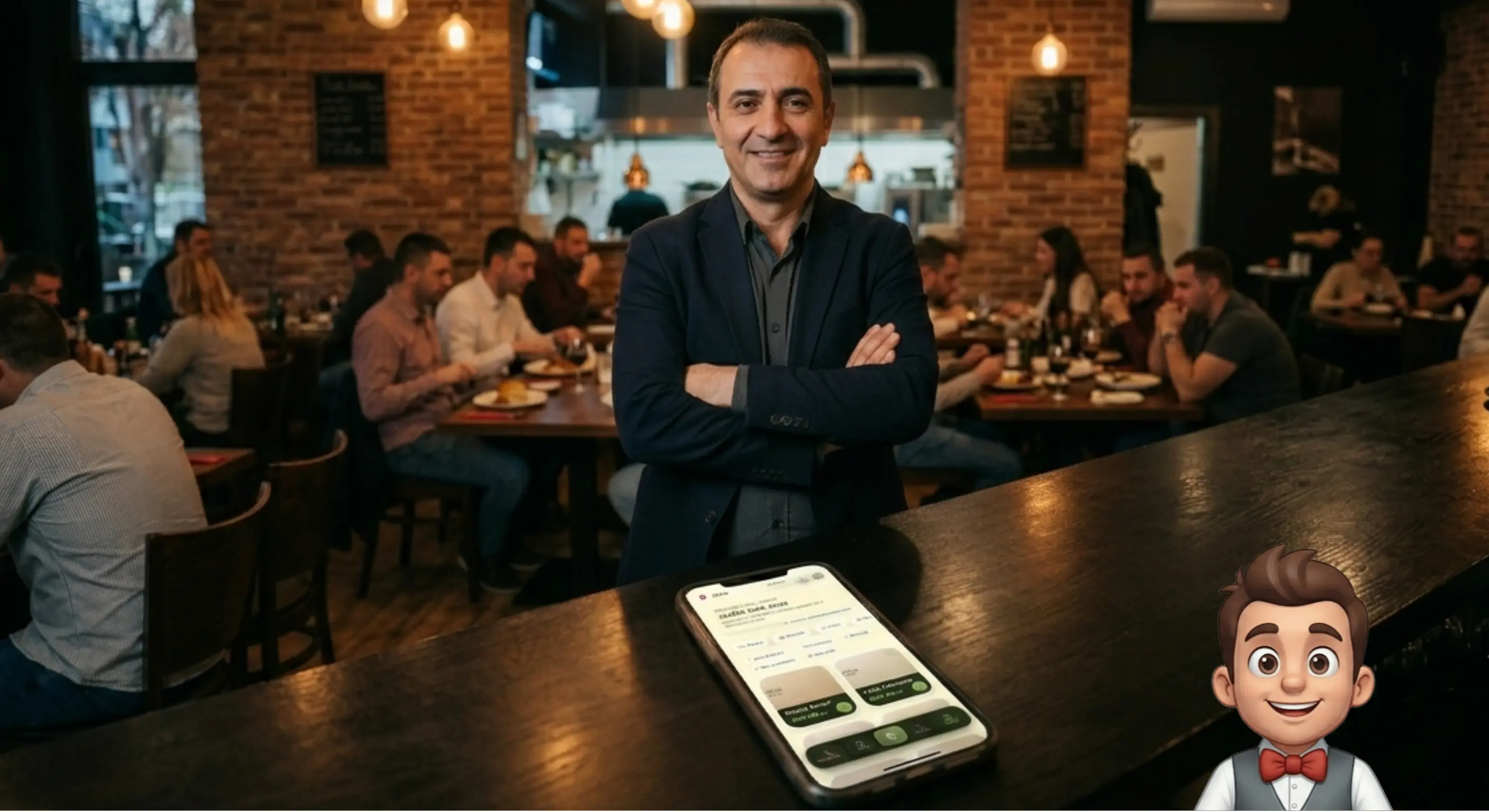
Marko has run a café for eleven years.
He knows everyone who walks through the door. He knows Dragica takes her Turkish coffee without sugar and Žika always sits by the window. He knows when he needs a third waiter and what sells on Saturday mornings.
Eleven years — and he has never taken out a loan. Never been late with the rent. Never closed the doors early.
But the system he works in — order pads, pencils, waving hands and waiters relying on memory — is older than he is. And that system had started costing him.
Marko just didn’t know it yet.
Dragica no longer comes in every Wednesday.
Žika has been in once in the past month.
Marko notices. But he doesn’t know why. And he has no way to find out.
Friday night — a full room, music playing, two waiters rushing. Table 8 has been waving for seven minutes. The waiter is across the room — he doesn’t see. The guest picks up his coat. Stands. Leaves.
Marko didn’t see it. He was behind the bar.
Until Marko can see, someone else decides. The guest decides to leave. Dragica decides not to come. The delivery platform takes 25–30% of every order placed through it — and the customer who ordered belongs to them, not to Marko.
The café is running on Friday night. But without Marko.
One Tuesday, his neighbour said to him: "Have you heard of Mali Konobar?"
Marko wasn’t interested. He already had a POS system he didn’t understand. A cash register that reset itself. Wi-Fi that went down on Fridays, right when he needed it most.
One more thing to learn. One more monthly expense. One more headache.
"It’s not like that," his neighbour said. "Guests order for themselves. From their phones. And yours rings."
Marko waved it away.
But that evening — after another Friday when table 8 had ended up empty — he opened the website.
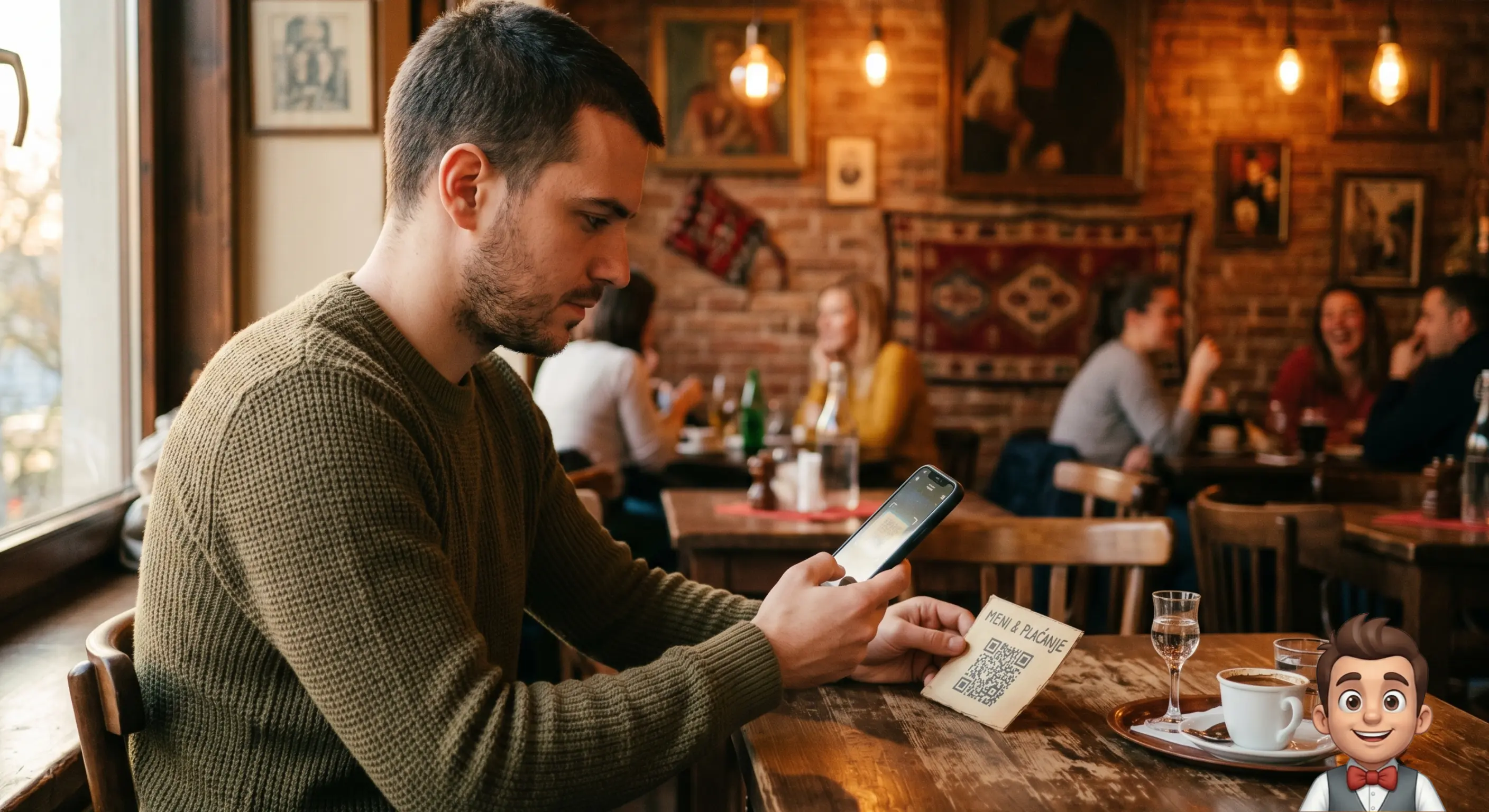
The system was set up in a couple of days, depending on the menu. Menu, photos and prices were entered for him. Marko didn’t need to know a thing about technology.
The first week, guests asked what the QR code was. A waiter would show them. The second time, they knew.
The second week, the waiter stopped carrying an order pad and pencil.
In the third week, Marko opened the analytics.
34
orders
Friday, 8–10 pm
0
missed
Zero mistakes
3×
rounds at table 8
Same Friday
And then — something Marko hadn’t expected.
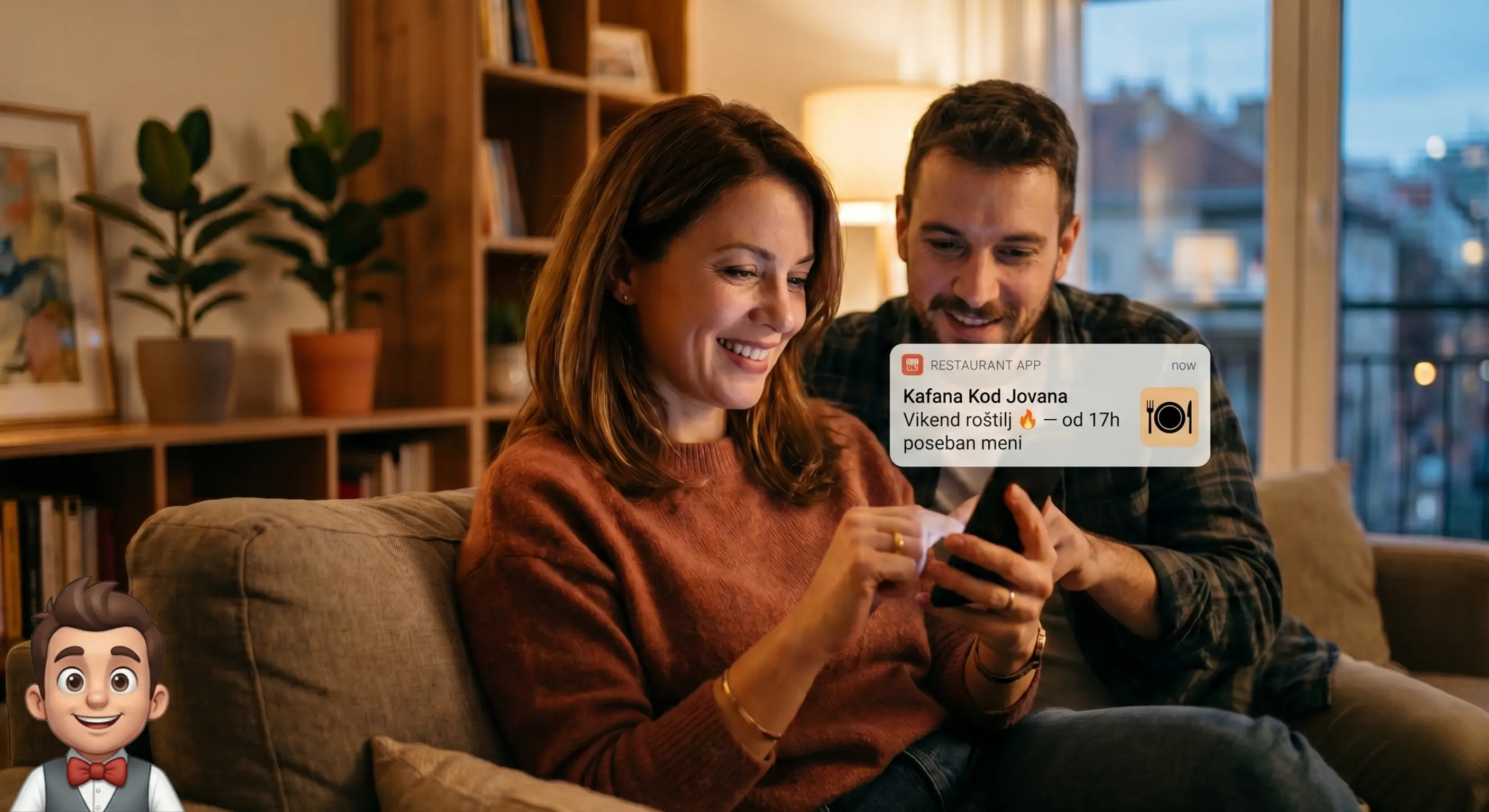
He sent a message. To every guest who had installed the icon on their phone. Wednesday morning: "Wednesday coffee — 20% off until 11 am."
Dragica got the message.
She came in.
She brought a friend.
Marko watched it happen — on his own phone, from behind the bar — in real time.
Two months later, Marko might say this:
He was quiet for a long time.
"I didn’t know how much I was losing. Eleven years — I thought I knew everything. But I didn’t know table 8 was losing me guests every Friday. I didn’t know why Dragica had stopped coming. I didn’t know how much money went to the delivery platform each month — while the customer ordering didn’t even know it was my café making the food."
A pause.
"Now I know. And I can do something about it. That’s it."
He didn’t say the app was brilliant.
He didn’t say the system had changed his life.
He said: now I know.
Marko’s café has twelve tables.
Two waiters.
He still arrives at six in the morning.
But on Friday nights — instead of standing behind the bar hoping everything is going as it should — Marko sits at table 8.
As a guest.
And watches his restaurant run. By itself.
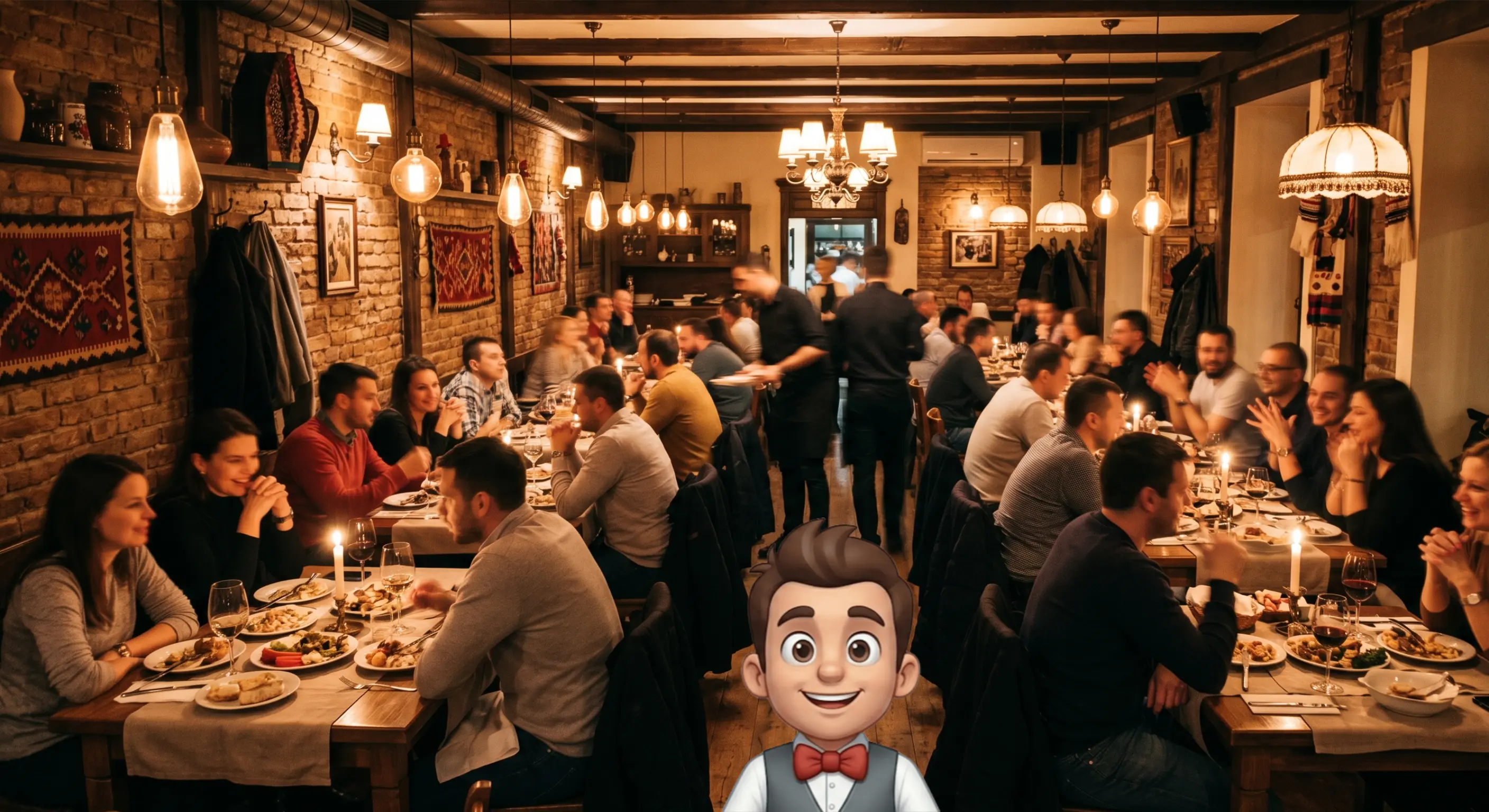
On the screen: 41 orders. Friday, 9 pm. Table 8 — third round.
Marko’s café isn’t any bigger.
Marko isn’t a better owner than he was before.
But now — at last — he knows what is happening inside it.
And that — as he put it himself — changes everything.
Marko has twelve tables. You may have fewer. You may have more.
Do you know what is happening in your restaurant
on Friday nights — while you’re behind the bar?
Your café can know what Marko’s knows.
Your first month is free. No card. No contract.
We set everything up.
Or call us: 062 951 6781 · Fifteen minutes. No obligation.